Simple Habits to Keep Your Eyes Healthy
Overview
Our eyes play an essential role in how we experience the world. From reading and working on digital devices to driving and recognizing faces, healthy vision supports nearly every aspect of daily life. However, modern lifestyles, especially increased screen time, can place additional strain on our eyes.
Fortunately, many common eye problems can be prevented or reduced through simple daily habits. Understanding how to care for your eyes, limit digital strain, and maintain healthy routines can help protect your vision and support long-term eye health.

Symptoms
When the eyes are overworked or not properly cared for, several symptoms may develop. These may occur after prolonged screen use, reading, or exposure to dry environments.
Common symptoms may include:
- Eye fatigue or discomfort
- Blurry or fluctuating vision
- Dry, irritated, or watery eyes
- Headaches, especially after screen use
- Difficulty focusing or increased sensitivity to light
While these symptoms are often temporary, frequent or persistent discomfort may indicate that your eyes need rest, better habits, or professional evaluation.

What You Should Know
Maintaining good eye health does not require complicated routines. Small lifestyle adjustments can make a significant difference in protecting your vision.
- Extended screen use can reduce blinking, which may lead to dry or irritated eyes.
- Regular breaks during digital work help reduce eye strain and fatigue.
- Proper lighting when reading or using devices helps the eyes focus more comfortably.
- Staying hydrated supports the natural tear film that keeps the eyes lubricated.
- Regular eye examinations help detect vision problems and eye conditions early, often before noticeable symptoms appear.

Practical Tips for Everyday Life
Adopting simple daily habits can help keep your eyes comfortable and healthy.
- Follow the 20-20-20 rule: every 20 minutes, look at something 20 feet away for at least 20 seconds.
- Position screens about an arm’s length away and slightly below eye level to reduce strain.
- Adjust screen brightness and contrast to match your environment.
- Blink frequently to keep your eyes naturally lubricated.
- Stay well hydrated throughout the day.
- Wear sunglasses with UV protection when outdoors to protect your eyes from harmful sunlight.
- Maintain a balanced diet that includes leafy greens, fruits, fish, and other nutrient-rich foods that support eye health.
- Ensure proper lighting when reading or working to reduce unnecessary strain on the eyes.

When to Seek Professional Guidance
Although occasional eye strain is common, certain symptoms should not be ignored. You should consider consulting an eye specialist if you experience:
- Persistent blurry or double vision
- Frequent headaches related to reading or screen use
- Ongoing dryness, irritation, or redness
- Difficulty focusing on objects
- Sudden changes in vision or the appearance of flashes or floaters
Early evaluation can help identify underlying conditions and ensure timely treatment when needed.
Key Takeaway
Healthy vision depends on consistent care and simple daily habits. Taking regular breaks from screens, maintaining proper lighting, staying hydrated, and scheduling routine eye examinations can help protect your eyes and support clear, comfortable vision for years to come.
Authored by the Ophthalmology Department at The View Hospital
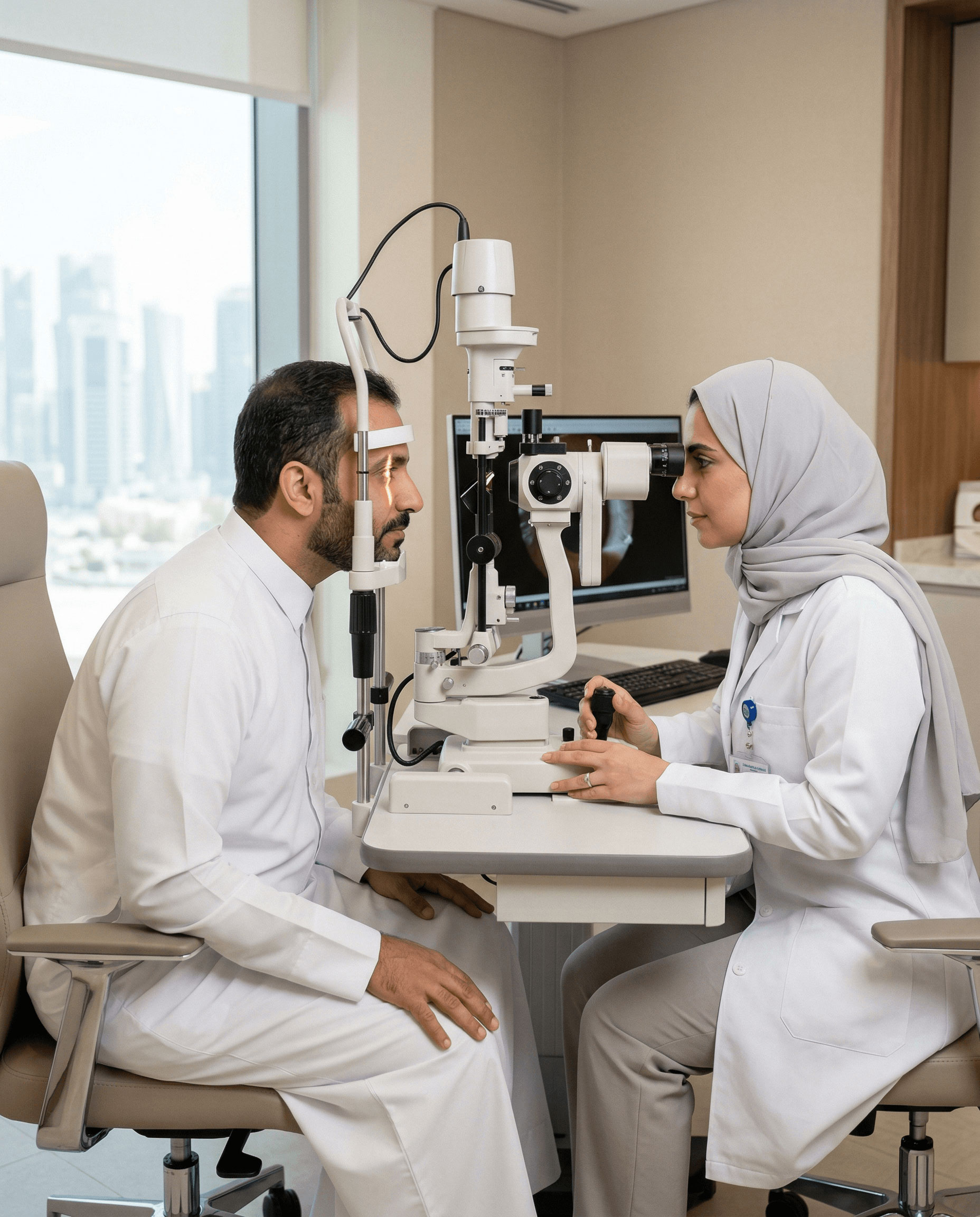
An ophthalmologist can provide personalized guidance based on your vision needs and overall eye health.
Diagnosis & treatment
This article is intended for public education and awareness purposes only.
مقالات ذات صلة